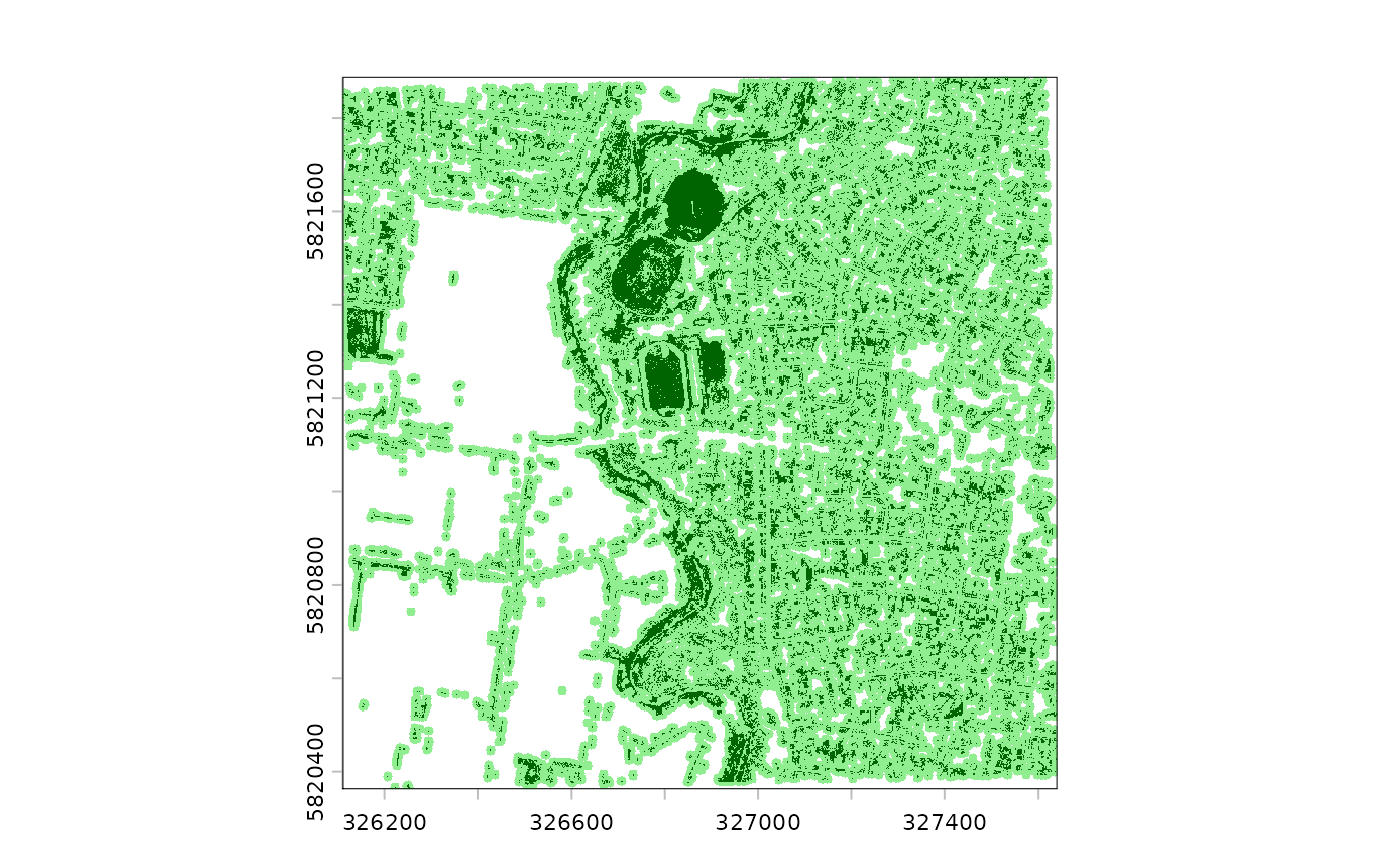
Buffer around the habitat a given distance in metres using
terra::focalMat(d = buffer_radius, type = "circle"). This operation is
used to identify connected patches of habitat. Two patches will connect
when their edge-to-edge gap is <= 2 * buffer radius. So, we recommend
you specify the buffer_radius value to be half the interpatch distance,
which is the distance past which habitat patches are no longer considered
connected. For example, if your interpatch distance is 500m, set
buffer_radius = 250.
Arguments
- habitat
Terra SpatRaster. Habitat raster.
- buffer_radius
Numeric. The radius in metres around the habitat. Since patches of habitat will be connected when their edge-to-edge gap is <= 2 *
buffer radius, we recommend you specifybuffer_radiusto be half the "interpatch distance". This is the distance past which habitat patches are no longer considered connected. For example, if your interpatch distance is 500m, setbuffer_radius = 250. The buffer can only be represented if it is at least one raster cell, i.e. keepresolution <= interpatch_distance / 2. Below that the buffer is a no-op:habitat_buffer()warns and returns the habitat unchanged. Seevignette("interpatch-distance-and-resolution").
See also
vignette("interpatch-distance-and-resolution") for the
relationship between interpatch distance, buffer radius, and resolution.
Examples
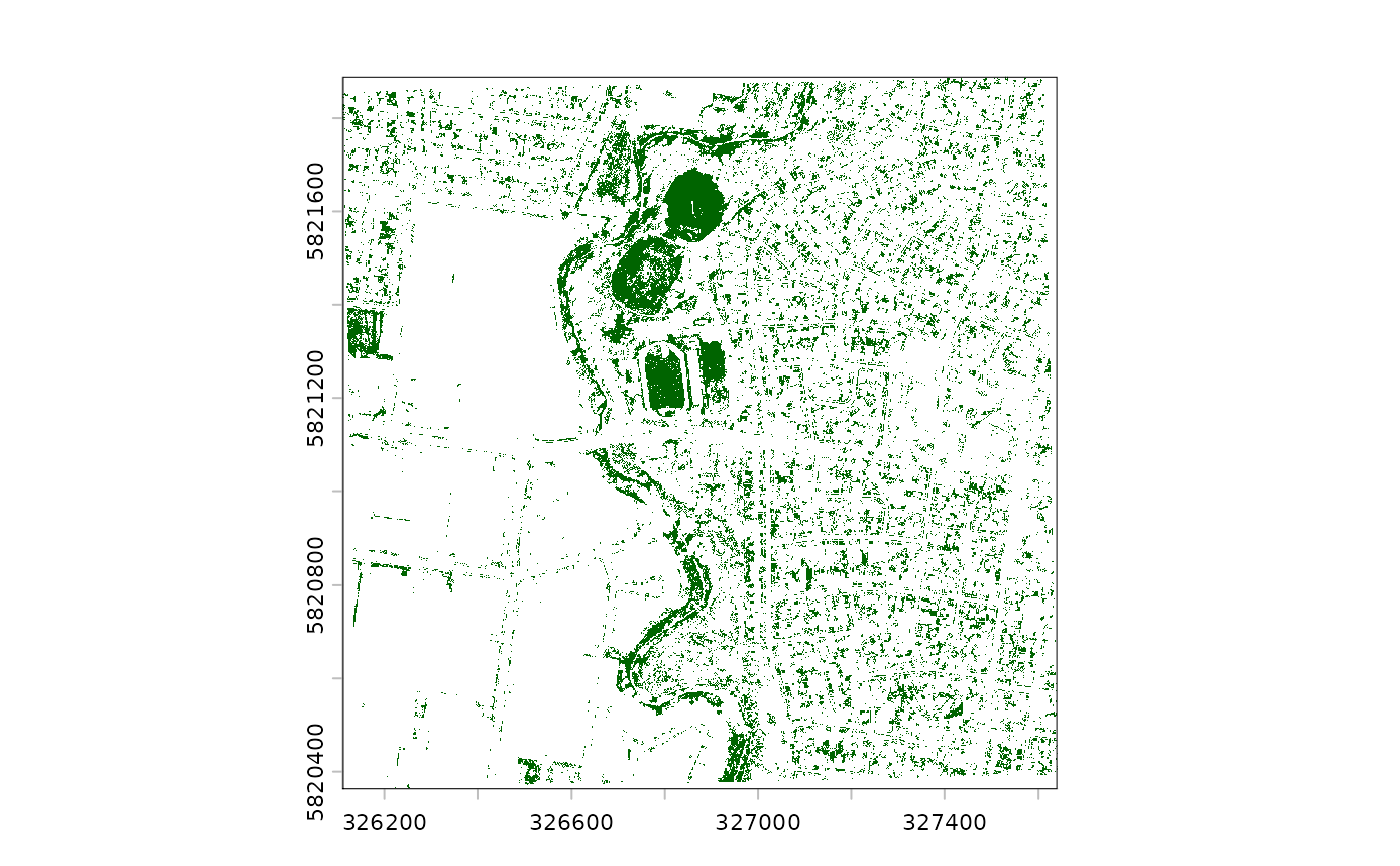
lizard_habitat <- example_habitat()
library(terra)
plot(lizard_habitat, col = "darkgreen", legend = FALSE)
 # run with a small buffer radius
lizard_buff <- habitat_buffer(lizard_habitat, buffer_radius = 10)
plot(lizard_buff, col = "lightgreen", legend = FALSE)
plot(lizard_habitat, col = "darkgreen", legend = FALSE, add = TRUE)
# run with a small buffer radius
lizard_buff <- habitat_buffer(lizard_habitat, buffer_radius = 10)
plot(lizard_buff, col = "lightgreen", legend = FALSE)
plot(lizard_habitat, col = "darkgreen", legend = FALSE, add = TRUE)